


Both Umrah and Hajj hold deep spiritual meaning for Muslims around the world. They represent devotion, sacrifice, and the journey of a lifetime. Every year, millions of Muslims travel to the holy city of Mecca to renew their faith and strengthen their connection with Allah. Yet, many people are unsure how these two pilgrimages differ.
While both Hajj and Umrah involve visiting sacred places and performing important rituals, they are not the same. Each one follows different rules, timings, and levels of obligation. Understanding these differences can help you prepare both spiritually and practically for your visit.
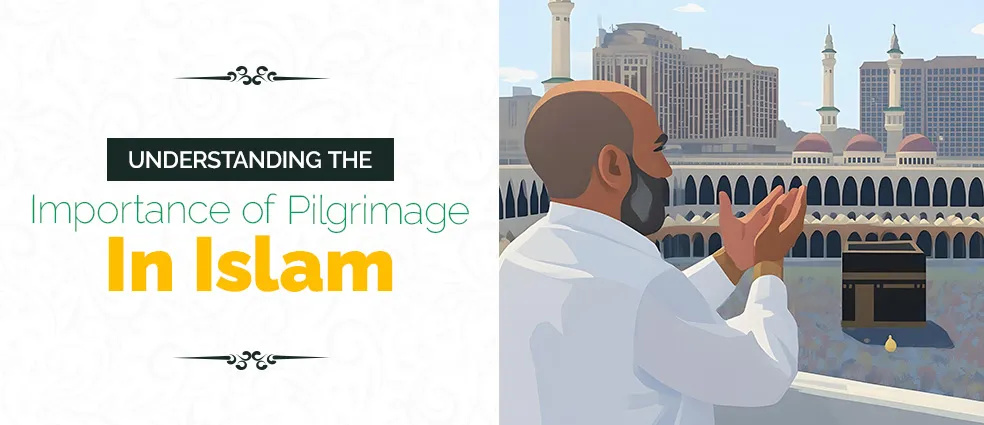
The pilgrimages of Hajj and Umrah are acts of worship that symbolize unity, equality, and submission to Allah. They allow Muslims to reconnect with the roots of their faith and experience a sense of renewal.
In Islam, pilgrimage to the holy city of Mecca is seen as one of the most powerful forms of worship. It is a journey that reminds Muslims of Prophet Ibrahim's devotion and obedience to Allah. Both Hajj and Umrah bring believers together from all walks of life, showing that everyone is equal in the sight of God.
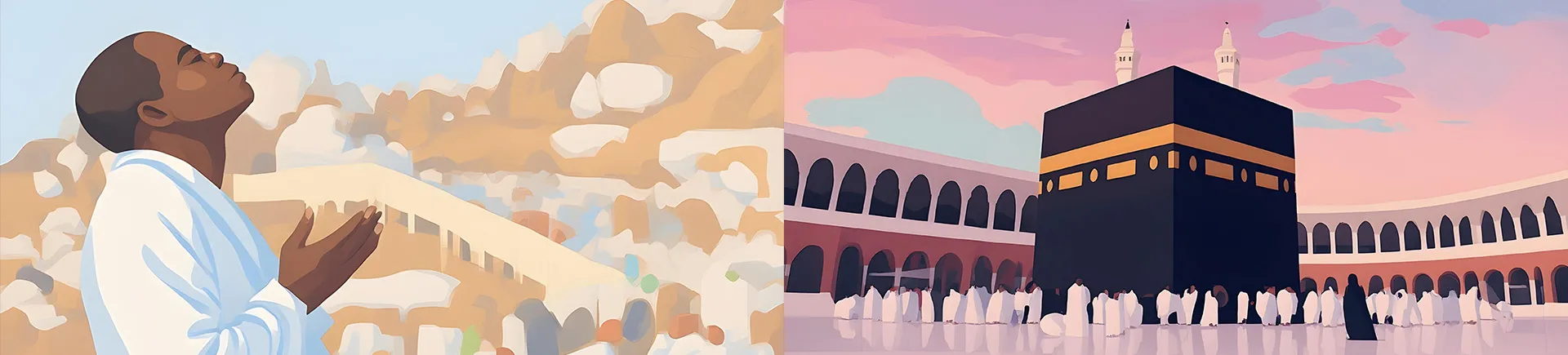
The Kaaba, located in the center of Masjid al Haram in Mecca, is the most sacred site in Islam. Muslims face it during prayer, no matter where they are in the world. Performing Hajj or Umrah allows pilgrims to circle the Kaaba, fulfilling a ritual that links them directly to the early days of Islam and the teachings of the Prophet Muhammad (peace be upon him).
Lastly, millions of Muslims visit Mecca each year because the pilgrimage represents an important spiritual renewal. It gives believers the opportunity to seek forgiveness, thank Allah for His blessings, and return home with a purified heart. These sacred experiences bring an unmatched sense of peace and unity among the global Muslim community.
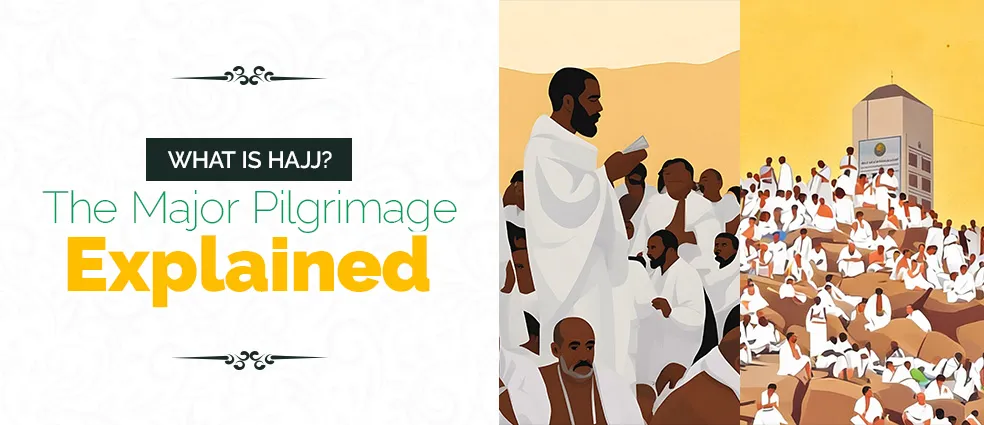
Hajj is one of the most significant acts of worship in Islam, performed once a year by Muslims who have the physical and financial ability to do so. It is both a physical and spiritual challenge that reflects complete submission to Allah.
Hajj is the fifth pillar of Islam, making it a mandatory act for all Muslims who are capable of carrying it out at least once in their lifetime. It represents equality before God, as pilgrims wear simple white clothing, leaving behind all worldly distinctions. It is a reminder that all human beings are equal before Allah and that true success lies in piety.
Hajj includes several meaningful rituals spread over multiple days:
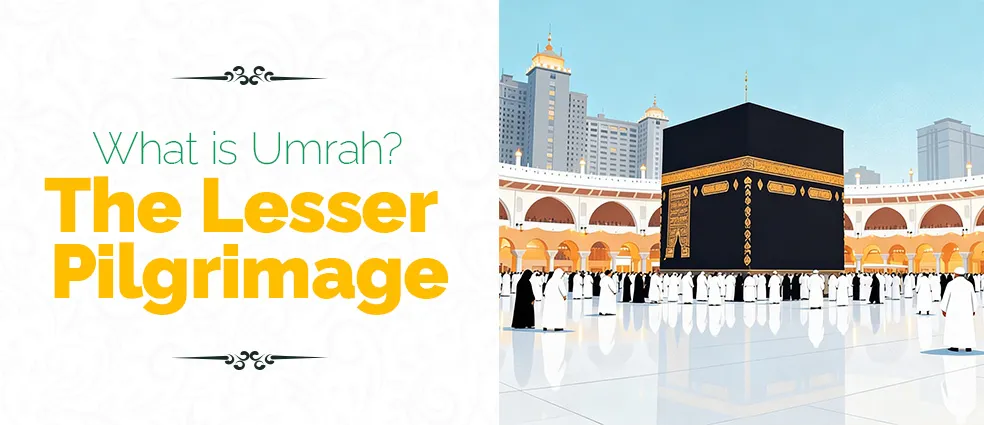
While Hajj is obligatory once in a lifetime, Umrah is a voluntary act of worship that can be performed at any time of the year. It offers Muslims a chance to seek forgiveness and come closer to Allah through similar rituals done over a shorter period.
Umrah may not be required like Hajj, but it carries immense spiritual rewards. Pilgrims perform it to cleanse the heart, strengthen faith, and seek blessings. Performing Umrah helps Muslims renew their devotion to Allah and reminds them of the virtues of patience, humility, and gratitude.
Umrah consists of four main rituals:
Unlike Hajj, Umrah can be completed within a few hours or over a single day, depending on the pilgrim's schedule.
Many Muslims perform Umrah more than once because it offers an ongoing opportunity for spiritual cleansing. Its flexibility in timing and shorter duration make it easier for families and individuals to complete.
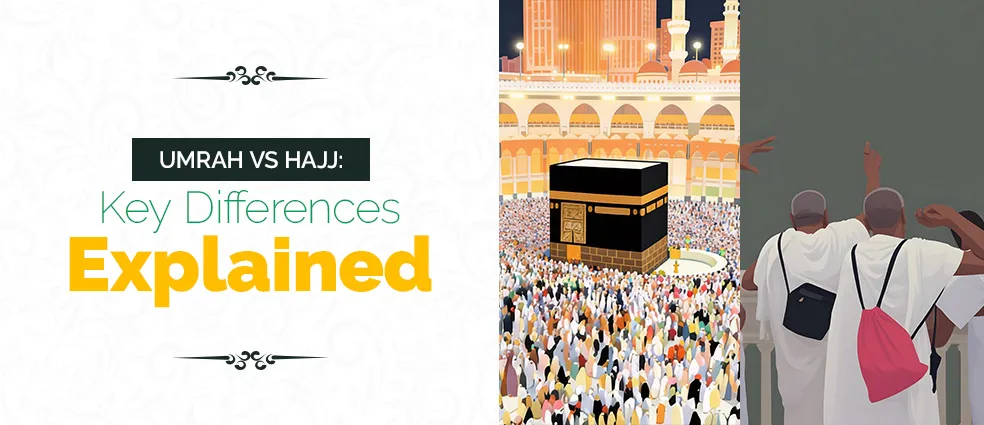
Although both journeys bring Muslims closer to Allah, they are not the same. Understanding these distinctions helps you prepare better for your experience.
Hajj is mandatory (Fard) once in a lifetime for those who are physically and financially able. Umrah, often referred to as the minor pilgrimage, is optional but deeply recommended.
Performing Umrah carries great rewards but is not considered a duty. While Hajj marks a complete fulfillment of a major Islamic duty, Umrah is a way to continuously renew one's spirituality and devotion throughout life.
Hajj involves a series of rituals performed over several days, following a set schedule during the Islamic month of Dhul Hijjah. Each act represents a lesson in sacrifice, patience, and unity. Umrah, on the other hand, is much shorter and less complex, focusing mainly on Tawaf, Sa'i, and Halq or Taqsir.
Lastly, Hajj can only be performed during the Islamic month of Dhul Hijjah. Umrah, however, may be performed at any time of the year. This flexibility makes Umrah perfect for Muslims with busy schedules or those seeking a spiritually focused retreat.
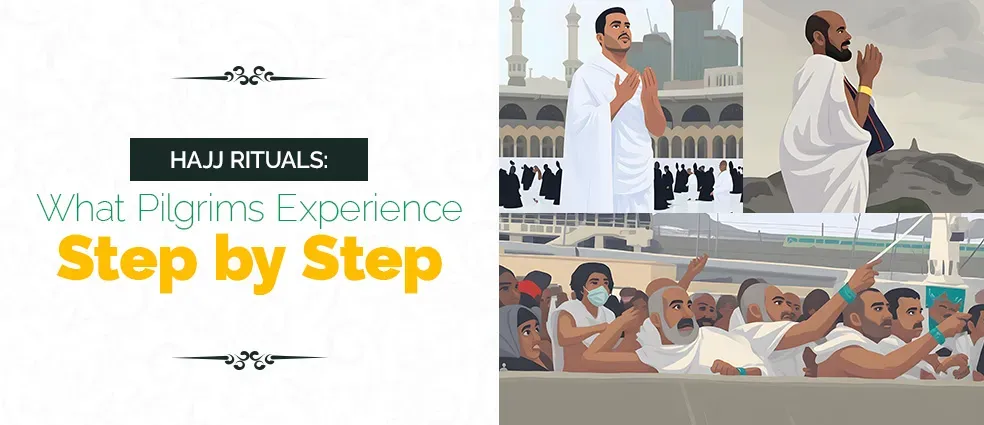
Hajj is a physically demanding and spiritually transforming journey, performed according to precise steps.
Firstly, before reaching Mecca, pilgrims enter the state of Ihram. It represents inner and outer purity, modesty, and complete devotion. Men wear two white sheets, while women wear simple, modest attire. During Ihram, pilgrims abstain from worldly actions and maintain a peaceful and humble state.
Standing at Arafat, known as Wuquf, is often called the heart of Hajj. Pilgrims spend the day in supplication, reflecting on their faith and seeking forgiveness. It represents the Day of Judgment and unites Muslims in sincere repentance.
At Mina, pilgrims take part in the symbolic stoning of three pillars that represent Satan. This act reminds believers to resist temptation and remain steadfast in faith. It is followed by the sacrifice of an animal, commemorating Prophet Ibrahim's obedience to Allah.
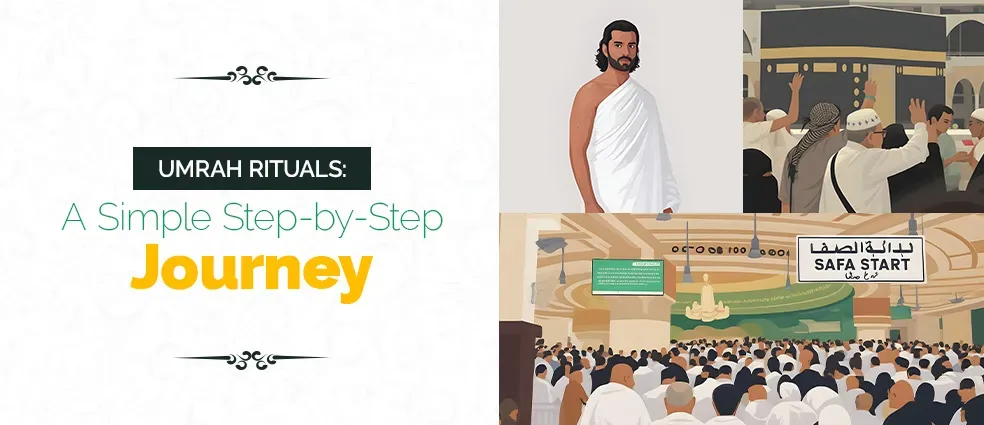
Umrah condenses the essence of Hajj into a shorter, more flexible pilgrimage while preserving its deep meaning.
Before arriving in Mecca, pilgrims enter the state of Ihram just like during Hajj. They recite the Talbiyah, declaring their intention for Umrah and focusing their hearts on Allah.
Moreover, pilgrims circle the Kaaba seven times in a counterclockwise direction, beginning each round from the Black Stone. Tawaf symbolizes unity and equality among all Muslims as they move together, centered on one God.
After completing Tawaf, pilgrims perform Sa'i between the hills of Safa and Marwa seven times. This ritual honors Hajar's faith and sacrifice when seeking water for her son Ismail. It reminds believers to trust Allah during life's trials and to remain patient in pursuit of His mercy.
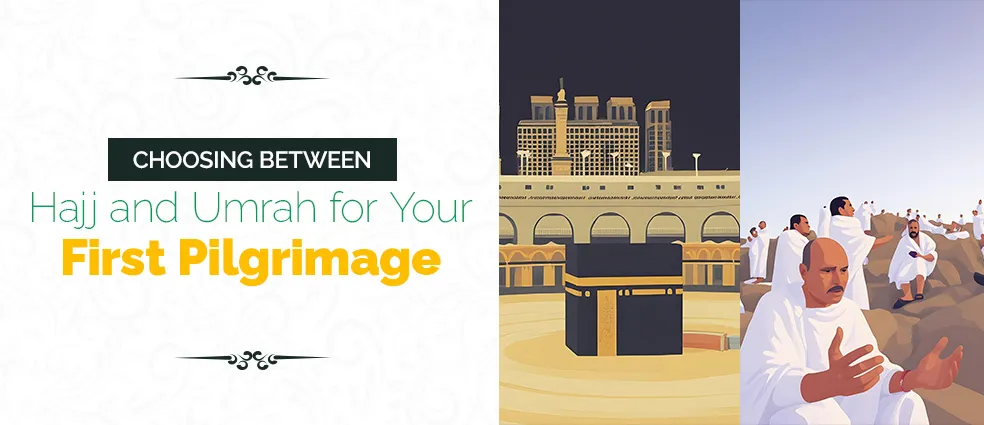
For many Muslims, deciding which pilgrimage to perform first is a personal and spiritual choice. Both journeys offer blessings, but factors like time, health, and cost often influence the decision.
Umrah is often the preferred choice for first‑time travelers because it is shorter, available year‑round, and less physically demanding. It allows pilgrims to become familiar with Mecca and the rituals before taking on the larger commitment of Hajj.
When planning your pilgrimage, think about:
Planning any pilgrimage can seem overwhelming. Certified agencies like Bismillah Tours manage flights, visas, hotels, and local guides so that every step is easier. Our experienced team assists with all the details, allowing you to focus on your worship and spiritual exploration. From pre‑departure orientation to on‑site support in Saudi Arabia, Bismillah Tours ensures a smooth and worry‑free sacred journey.


 Call Me Back