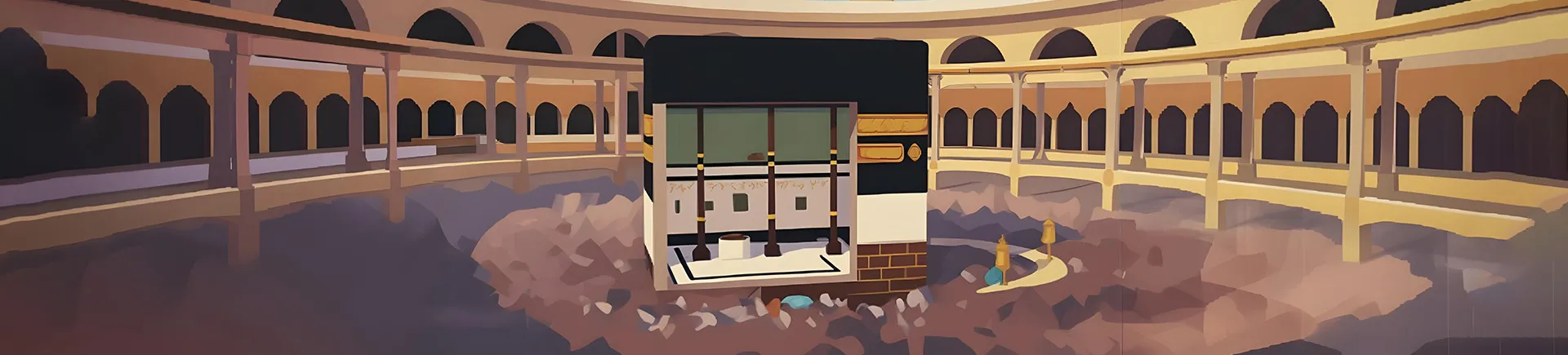



Most people have seen the Kaaba at least once. Maybe in pictures. Maybe in videos. Or maybe during Hajj or Umrah. It always looks the same. A big black cube, standing in the center. Surrounded by thousands, sometimes millions, of people moving around it in circles. And naturally, a very simple but strong question pops into the mind. What is actually inside the Kaaba? Some imagine something huge and fancy. Others think there must be hidden treasures or something very special inside. But when we really look into it, the truth is very different from what most people expect.
The inside of the Kaaba is not about showing off beauty or wealth. It is quiet, simple, and very meaningful in a deeper way. It is not a place made for display like a museum. Instead, everything inside has a purpose and a reason. Also, something important to understand right from the start is that almost no one gets to go inside. Access is extremely limited. So in this guide, everything will be explained in a very clear and simple way.
Inside the Kaaba, there are only a few main things. Nothing too complex. Nothing too fancy.
Here's what is inside:
That's it. No gold-covered rooms. No hidden treasures. No complicated design. The space is small, clean, and calm. Everything inside focuses on purpose, not decoration.
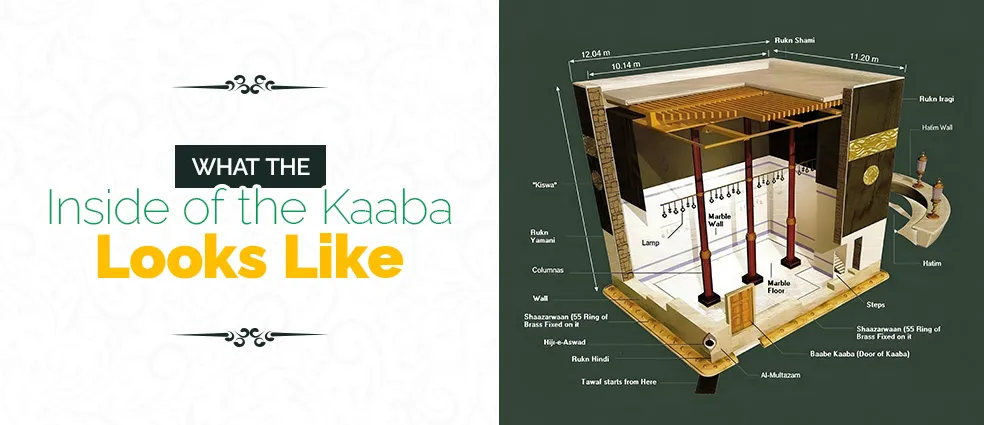
Now let's go a little deeper. Because even though the inside is simple, every part still has meaning and use. Nothing is random. Everything is placed with intention.
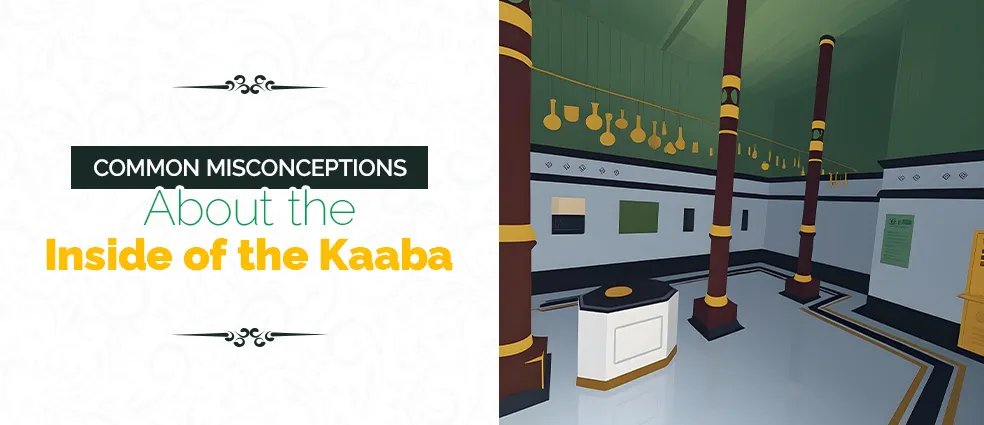
Inside the Kaaba, there are three wooden pillars standing in a straight line. These pillars are very important because they hold up the roof. So these are not for beauty or decoration. They are there to keep the building stable and strong.
Each pillar is thick and evenly placed, giving balance to the whole structure. When people imagine something grand, they usually think of shiny or fancy objects. But here, the focus is completely different. The pillars show strength, simplicity, and purpose.
When we look at the surfaces inside, we see marble everywhere. The floor of the Kaaba is made of white marble, which gives a clean and peaceful feeling. The lower parts of the walls are also covered in marble tiles. Then, as we move higher, the upper walls are covered with a green cloth. This cloth has verses from the Quran written on it in gold.
So even though the design is simple, it still feels very special and respectful. It quietly reminds people of faith without being overwhelming.
Another thing you will notice inside is the lamps. These lamps hang from the ceiling and are usually made from materials like gold or silver.
They are used to provide light inside the Kaaba. But they also have another purpose sometimes. They are used to burn incense. Incense is a material that creates scented smoke when burned, giving a nice and calming smell. So the inside of the Kaaba is not just clean to look at. It also smells peaceful and fresh.
Inside, there is also a small table or cabinet. This is not something fancy or decorative. It is used for practical things. For example, it may store cleaning items, perfumes, or other small necessary objects.
This again shows a very clear idea. Everything inside the Kaaba is there for a reason. Nothing is placed just to look nice. There is no extra decoration that does not serve a purpose. This makes the space feel very real and grounded.
Lastly, there is a small door inside. This door leads to a staircase that goes up to the roof. This door is called Bab al-Taubah. Bab means door, and Taubah means repentance.
So the name itself carries a deep meaning. This area is not for public use. It is mainly used for maintenance, meaning work like cleaning or checking the structure.
Now comes the most important part. The overall feeling inside the Kaaba.
When people think about such an important place, they often expect something grand, filled with decoration and detail. But the reality is very different. The space inside is open, quiet, and simple. This creates a very calm and focused environment. It allows the mind to feel peaceful and centered.
Everything inside points towards one idea. Focus on worship. Not on things. This simplicity is not a weakness. Instead, it is the main message.
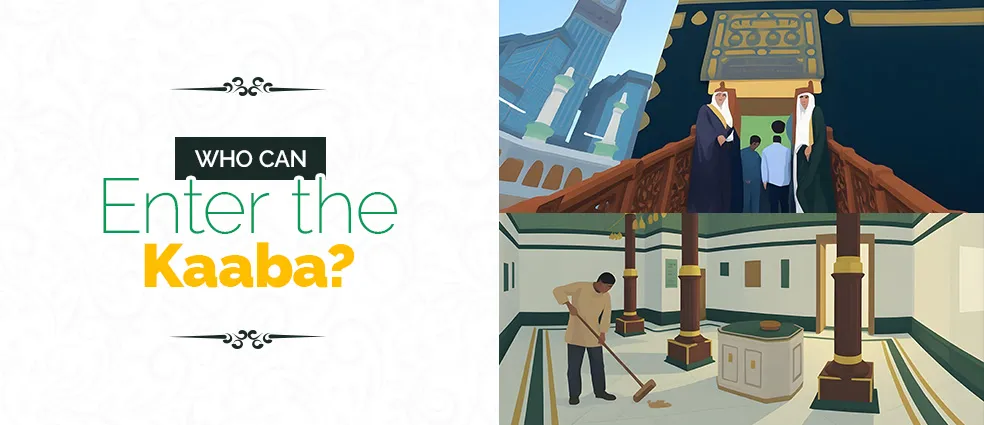
Now let's talk about something many people are curious about. Can anyone go inside the Kaaba? The short and clear answer is no.
The Kaaba is not open to the public. Even if someone travels all the way to Makkah for Hajj or Umrah, they still cannot enter it. Even during these important visits, entry into the Kaaba is not allowed for regular people. This is done to protect the space and maintain its respect. If everyone were allowed inside, it would become crowded and difficult to manage. So access is kept very limited and controlled.
Only a small number of people are allowed to enter the Kaaba.
These usually include:
These visits are not common. They happen rarely and are carefully planned. No one can just walk in. Permission is required, and it is given only to selected individuals.
There is also a special family connected to the Kaaba. This is the Al-Shaibi family. They are known as the guardians of the Kaaba. This family holds the keys to the Kaaba. They are responsible for opening and closing the door when needed.
This role has been passed down from generation to generation. That means it has stayed within the same family for many years. This tradition shows continuity and respect for history.
The Kaaba is not open regularly. It is usually opened only on special occasions. One of the main times is during the cleaning ceremony. This happens about twice a year.
During this event, the inside of the Kaaba is cleaned carefully. Special scented water and oils are used. This makes the space fresh and maintains its condition.
Beyond the physical appearance, the real importance of the Kaaba is way deeper. The real value of the Kaaba comes from what it represents. It stands for something much bigger than a building.
One of the biggest reasons the Kaaba matters is that it is the Qiblah. It means the direction Muslims face when they pray. So no matter where someone is in the world, they turn towards the Kaaba during prayer.
This holds a very deep meaning. Millions of people, spread across the whole world, are all turning in one direction at the same time. That creates a strong sense of connection. Even if people don't know each other, they are still united in that moment. The Kaaba becomes a central point that brings everyone together.
Moreover, the Kaaba is not just a direction. It is a symbol of unity. Muslims from all over the world are connected through one simple act: prayer.
Everyone stands, bows, and prostrates in the same direction. That shared action creates a deep feeling of togetherness. It reminds people that they are part of something bigger than themselves. And the Kaaba is at the center of that connection.
The Kaaba also has a deep history. It was built by Prophet Ibrahim and his son Ismael. They built it for one main purpose. To worship one God. So from the very beginning, the Kaaba was not meant to be a place of luxury or display. It was meant to be a place of focus. A place where people turn their attention towards God alone.
This is something many people misunderstand. They think the importance of the Kaaba must come from what is inside it. Maybe something hidden. Maybe something rare or valuable. But that is not true. Nothing that makes it "special" in a material way.
The simplicity of the Kaaba sends a clear message. Worship is not about things. It is about intention. So when someone prays, the focus is not on the building. The focus is on their connection with God. The Kaaba simply helps guide that focus.
Normally, Muslims have to face the Kaaba when they pray. But if someone is already inside it, then what? In that case, they can pray in any direction. This is because they are already within the Qiblah. They are already at the central point. So direction no longer matters.
Now let's clear up some common misunderstandings. Because a lot of people have wrong ideas about what the Kaaba is like.
Many people imagine something very fancy. Gold everywhere. Detailed designs. Shiny decorations. It sounds exciting, but it is not true. The inside is simple and calm. And this is not by accident. It is done on purpose. The simplicity keeps the focus on worship, not on visual beauty.
This is another very common belief. People think that if they go for Hajj or Umrah, they might get a chance to go inside. But that does not happen. Even people who visit many times never enter it. Access is extremely limited. Only selected individuals are allowed in, and only on special occasions. So visiting Makkah does not mean entering the Kaaba.
Lastly, some people think the real importance must be inside the building itself. Like, there is something hidden inside that gives it value. But that idea is not correct. The importance is spiritual, not physical things. The Kaaba represents unity, direction, and worship. That is where its true value comes from.
So, when we come back to the question, what is inside the Kaaba? The answer is simple. There are a few essential elements: pillars, marble surfaces, lamps, and a small, open space. Nothing elaborate or extravagant.
But the true significance of the Kaaba has never been about what is inside. It lies in what it represents.
For Muslims around the world, the Kaaba is a symbol of unity, direction, and devotion. Every day, millions turn toward it in prayer, connected by a shared purpose, even if most will never step inside. Its simplicity serves as a powerful reminder that worship is not about physical surroundings, but about intention and faith.
For those who do have the opportunity to visit Makkah, seeing the Kaaba up close is a deeply moving experience. Many travelers plan their journey through carefully arranged Umrah packages, allowing them to focus fully on the spiritual aspects of their visit without distraction.
In the end, the power of the Kaaba is not in its interior, but in the meaning it holds for millions. It continues to guide hearts and bring people together, no matter where they are in the world.


 Call Me Back