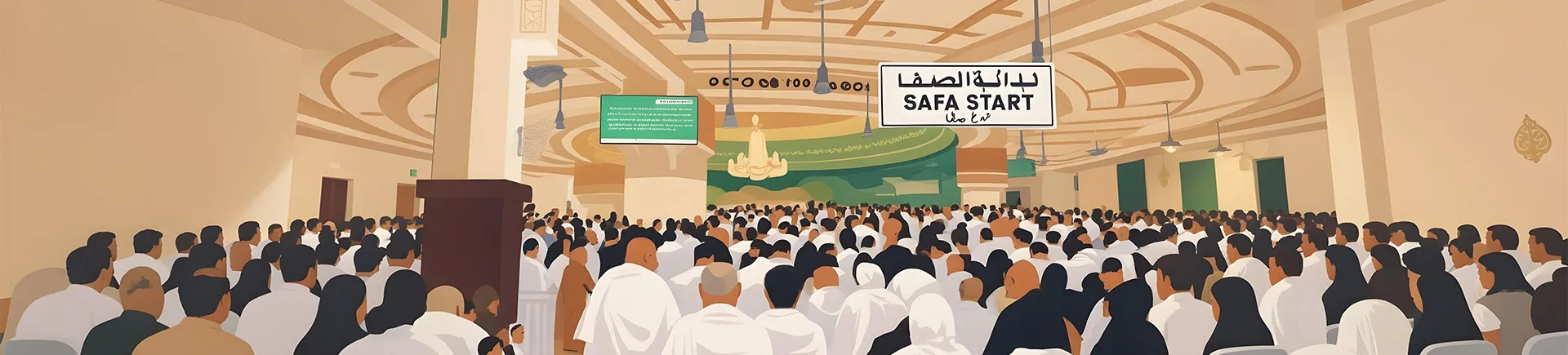



Some parts of Umrah and Hajj are not just actions. They are stories you walk through. Safa and Marwa are one of those moments where history, emotion, and worship come together in a way that feels very real. Inside Masjid al-Haram in Makkah, there are two small hills called Safa and Marwa. Pilgrims walk between them seven times in a ritual called Sa'i.
This act comes from the story of Bibi Hajar, the wife of Prophet Ibrahim, and her search for water for her baby, Prophet Ismail. Her struggle, her patience, and her trust in Allah are what this ritual represents. When pilgrims perform Sa'i, they are not just moving from one point to another. They are reliving that moment of effort, hope, and belief.
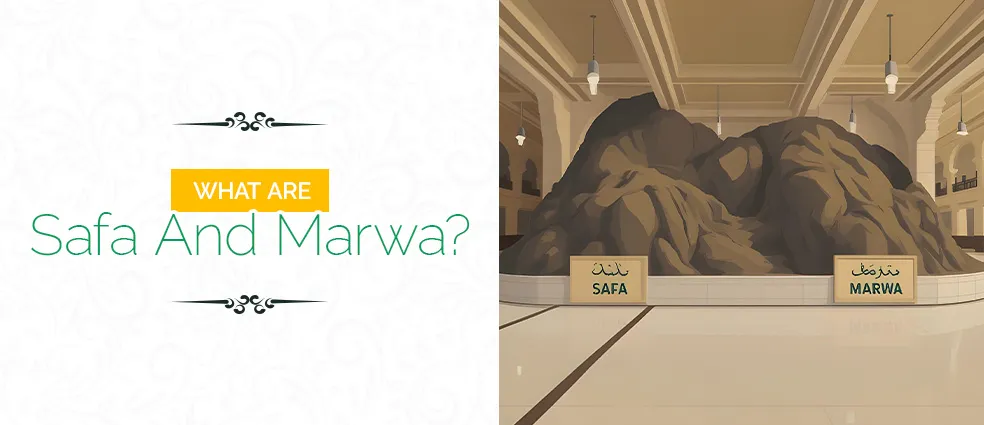
Let's first understand what these are.
Safa and Marwa are two small hills within Masjid al-Haram, the main mosque in Makkah, where the Kaaba is. They are not far apart, and today they are connected by a long, covered walkway that pilgrims use during Sa'i. This walkway is clean, wide, and designed to handle large crowds, especially during the Hajj and Umrah seasons.
Even though the area looks modern now, the importance of Safa and Marwa comes from what happened there in the past.
Safa and Marwa are not just physical locations. They are symbols. They represent effort, patience, and complete trust in Allah. Walking between them reminds Muslims that even in difficult situations, you keep trying, you keep moving, and you don't give up. This importance is also mentioned in the Quran.
Allah says in Surah Al-Baqarah (2:158) that Safa and Marwa are among the signs of Allah. This means they are not ordinary places. They are part of the faith and hold deep meaning in Islamic practice.

Let's talk history
This is where everything begins. Bibi Hajar was left in the desert with her baby, Prophet Ismail, by Prophet Ibrahim. This was not an easy situation. There was no water, no people, and no resources around them. It was a completely empty valley. At first, they had some water. But soon, it ran out.
When the water finished, baby Ismail started crying from thirst. This is where Bibi Hajar's struggle begins. She didn't sit, wait, or give up. She started searching for water. And she ran between the two hills, Safa and Marwa, again and again, hoping to find help or see someone in the distance.
Bibi Hajar ran seven times. Not because she knew water was there. But because she trusted that something would happen.
After her effort, Allah sent Angel Jibreel. The angel struck the ground, and water began to flow. This water, known as Zamzam, still exists today near the Kaaba. Millions of people drink from it every year. This moment shows something important. Effort comes first. Then help comes.
This is not just a story from the past. It is a lesson. It teaches patience, trust, and action. Bibi Hajar didn't stop after one attempt. She kept going. That's why Sa'i exists today. It reminds pilgrims of that effort and that belief. When you walk between Safa and Marwa, you are not just walking. You are remembering her struggle.
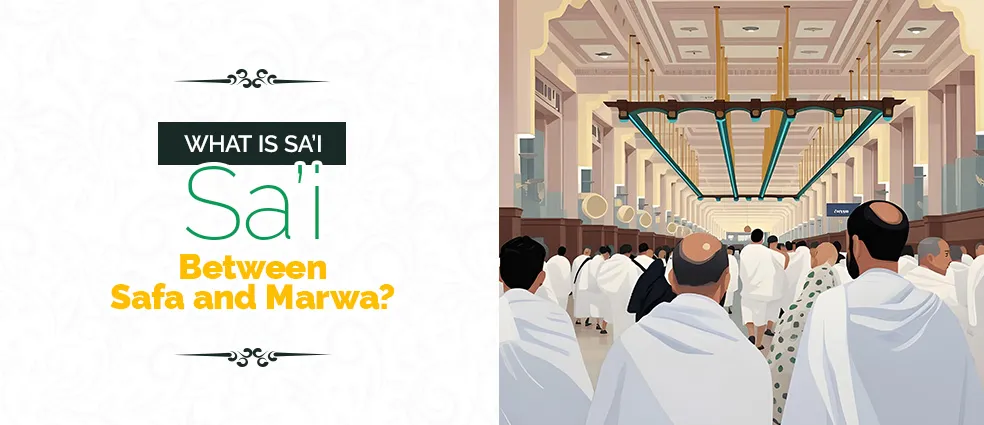
A question that everyone asks
Sa'i is the act of walking between Safa and Marwa seven times. That's it in simple words. But the meaning behind it is much deeper. It is one of the essential rituals of Umrah and Hajj, and it represents the effort of Bibi Hajar. Every step you take connects back to that moment in history.
Muslims perform Sa'i to follow the example of Bibi Hajar and to remember her patience and trust in Allah. It is not just physical movement. It is a reminder that in difficult times, you keep trying, even when things seem impossible.
Sa'i is done after Tawaf. Tawaf means walking around the Kaaba seven times. After completing Tawaf, pilgrims move towards Safa and begin Sa'i from there. So the sequence matters. First Tawaf. Then Sa'i.
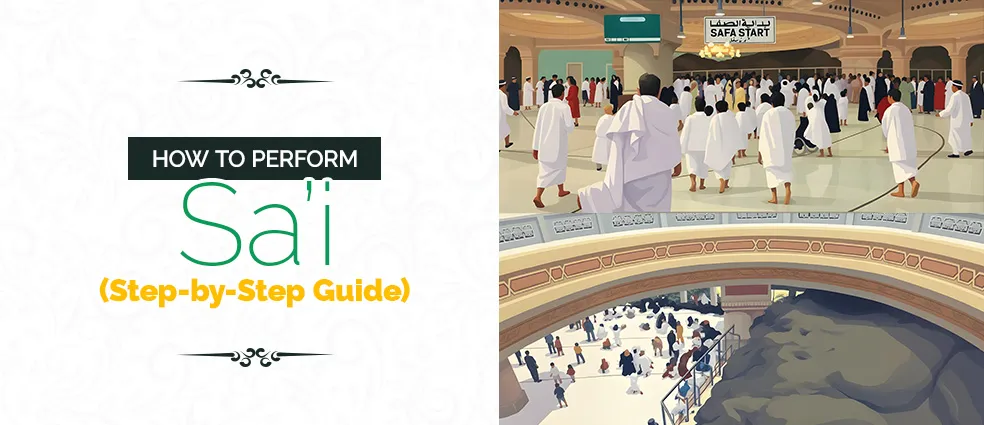
A step-by-step guide so it's easier for you to understand.
Before you begin, you make your intention. This is called Niyyah. Niyyah simply means deciding in your heart that you are about to perform Sa'i for Umrah or Hajj. You don't need to say anything complicated. It is just a clear intention. Then you go to Safa.
When you reach Safa, you face the Kaaba. You raise your hands and make dua. This is your moment to ask, reflect, and connect. Many people also recite the Quranic verse about Safa and Marwa. You don't need to rush. This is the start.
From Safa, you start walking towards Marwa. This is counted as one round. The path is long but smooth. Along the way, you will see green lights. These lights mark a specific area where Bibi Hajar ran. Men are encouraged to walk faster or jog slightly in this section, while women are encouraged to continue at a normal pace.
Once you reach Marwa, you have completed one round. Then you turn back and walk to Safa. That becomes the second round. This continues until you complete seven rounds in total. You always start at Safa. And you finish at Marwa.
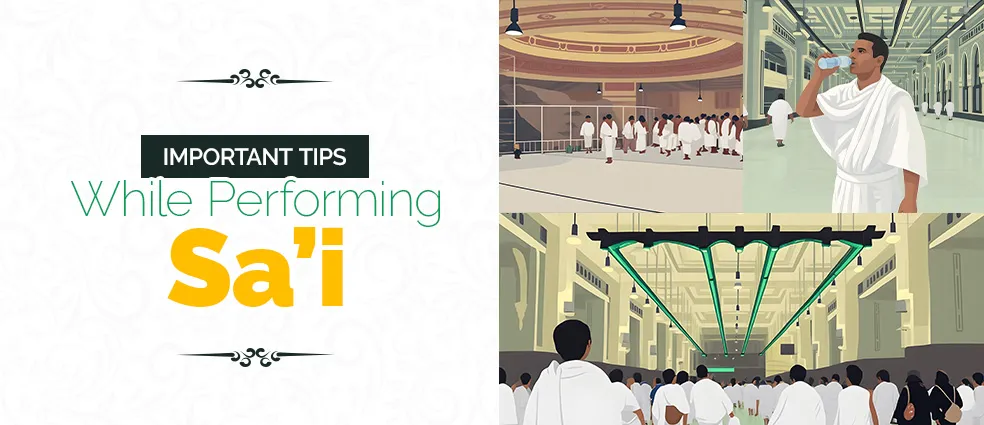
Sa'i is not something you rush through just to "get it done." It's actually one of the most meaningful parts of Umrah, and the way you do it can completely change how you experience it.
This is probably the biggest thing people get wrong. The moment they start Sa'i, they feel like they need to finish quickly, almost like it's a task to complete. But Sa'i is not about speed at all. You are allowed to walk at your own pace. You can slow down, pause for a second, and take everything in. When you rush, you miss the entire feeling of what you're doing. When you slow down, you actually connect with it.
A lot of people worry that stopping will somehow affect their Sa'i, but that's not true. You can take breaks whenever you need to. If you feel tired, just sit down. If you need water, drink it. There is no rule that says you have to complete all seven rounds without stopping. Think of it like this. Sa'i is about effort, not exhaustion.
This is something that confuses a lot of people. Wudu, which means being in a clean state like you are for prayer, is good to have during Sa'i, but it is not compulsory. So if you lose your Wudu while doing Sa'i, you don't have to panic or start again. Your Sa'i is still valid. You can simply continue. That being said, many people still prefer to stay in Wudu because it helps them feel more spiritually focused. But it's a choice, not a condition.
Sa'i involves walking back and forth multiple times, and even though the area is air-conditioned, you can still feel tired, especially during busy times. So keep water with you or take small sips whenever you can. There are Zamzam water points available, and drinking Zamzam during Sa'i just adds to the experience. Staying hydrated keeps your energy up and helps you stay comfortable throughout the rounds.
During Sa'i, you'll notice green lights between Safa and Marwa. This marks the area where Hajar (AS) ran while searching for water. Men are encouraged to walk faster or lightly jog in this section. Women continue at their normal pace.
This might sound simple, but it's actually powerful. It's very easy to get distracted during Sa'i, especially with the crowd, movement, and everything happening around you. But if you stay mentally present, the experience feels completely different.
You can:
There's no fixed script you must follow. What matters is sincerity, not perfection.
This sounds basic, but it matters more than you think. You're walking a lot, and uncomfortable shoes can quickly turn the experience into something tiring instead of peaceful. Pick something simple, soft, and easy to walk in. The floor is smooth marble, so you don't need anything heavy. Just something that feels good for walking multiple rounds.
A lot of people overthink Sa'i before they even start. They worry about doing everything exactly right, remembering every step, every dua, every detail. But here's the truth. Sa'i is not about perfection. It's about intention. Even if you forget something small, your effort still counts. What matters is that you are doing it sincerely. So don't let stress take away from the experience.
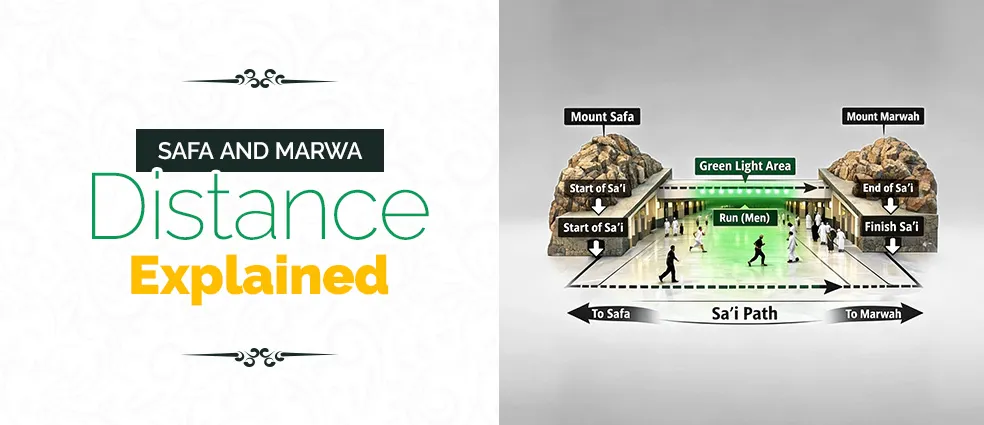
Let's talk about the distance.
Okay, so let's clear the confusion because this is something almost everyone wonders about before starting Sa'i. The distance from Safa to Marwa in one direction is around 400 to 450 meters. On paper, that sounds pretty small, like "oh that's easy," but once you actually start walking, it hits a bit differently.
It's not hard in terms of terrain because the path is smooth and well-built, but repeating it multiple times is what makes you feel the effort. You slowly realize that this isn't just a quick walk, it's meant to be something you move through with patience, not speed.
Since you're walking back and forth seven times, the total distance becomes around 3 to 3.5 kilometers. This is why pacing matters so much. If you start too fast, you'll feel drained halfway through. But if you keep it chill and steady, it actually becomes way more manageable. Sa'i isn't about rushing to finish. It's more about staying consistent and present the whole time.
There's no fixed timing, which honestly makes it less stressful. Some people finish in around 30-40 minutes if they walk faster, while others take about an hour or even more if they stop, sit, or just go slow. And that's completely fine. No one's timing you. What matters is completing it properly, not quickly. Taking your time actually helps you feel more connected to what you're doing instead of just treating it like a task to check off.
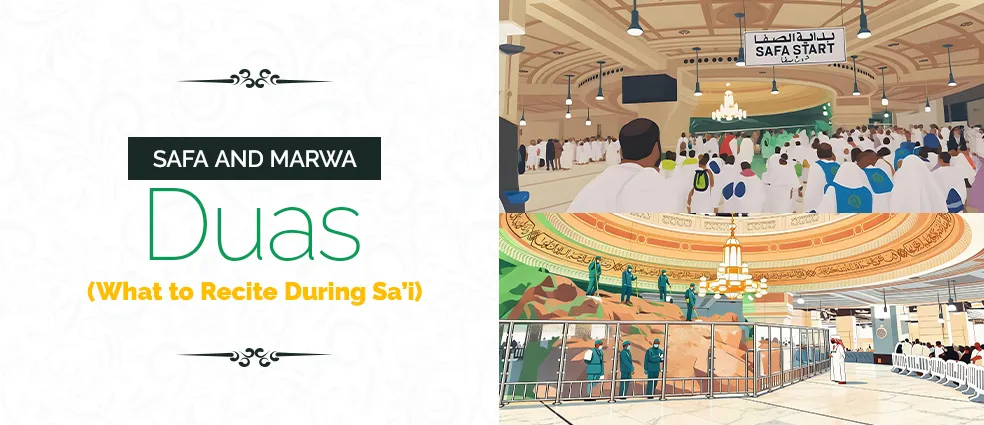
Here are the Duas that you should not forget.
When you reach Safa, everything begins. You face the Kaaba and recite the verse: "Inna as-Safa wal-Marwata min sha'a'irillah." It basically means Safa and Marwa are among the signs of Allah. After that, you raise your hands and make dua. And this part is actually really personal. There's no pressure to say something perfect or memorized. You just speak from your heart. Ask for what you need, reflect a little, and take a moment before starting the walk.
This is where people overthink a lot, but honestly, you don't need to. There is no fixed dua that you have to read while walking. You can recite the Quran, make your own duas, or just do simple dhikr. Dhikr just means remembering Allah by saying things like SubhanAllah, Alhamdulillah, or Allahu Akbar. It's simple, it's calm, and it keeps you connected without making things complicated. So don't stress about memorizing long things.
When you reach Marwa, you basically repeat what you did at Safa. Face the Kaaba, raise your hands, and make dua again. It becomes like a pause point in your journey. You catch your breath, reset a little, and then start the next round. This rhythm actually makes the whole process feel smoother instead of tiring.
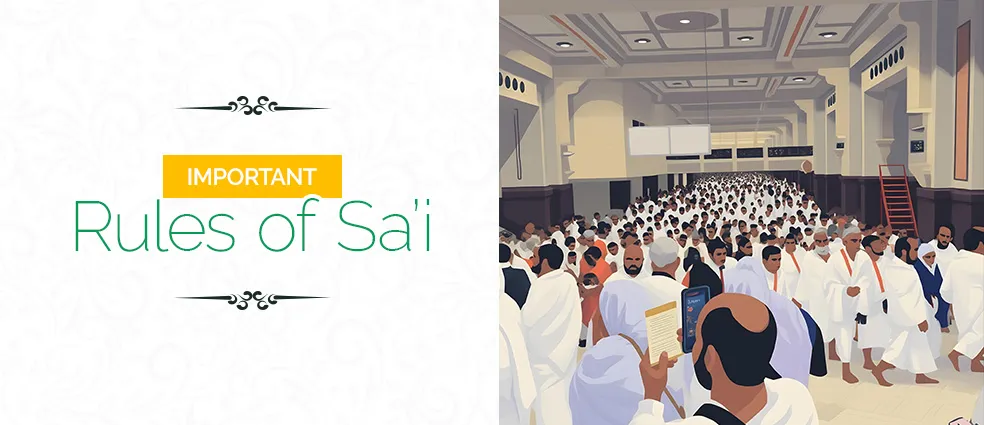
Don't forget these!
This part is non-negotiable. Sa'i has to be exactly seven rounds. Not six, not "almost seven," not guessing. So it's important to stay aware of your count. It's easy to lose track, especially when you're tired, so just stay a little mindful as you go.
This is one of the most common mistakes people make. You have to start at Safa, not Marwa. Safa to Marwa is one round, then back is the second, and so on. If you mess up the starting point, it affects the whole sequence. So just lock this in your head before you begin.
A lot of people think they need to power through without stopping, but that's not how it works. You can sit, rest, drink water, and then continue. Your Sa'i is still valid. In fact, taking breaks can help you complete it more comfortably, rather than exhausting yourself early.
Don't be like them.
This happens more than you think. You're walking, thinking, maybe distracted, and suddenly you're like… wait, was that round 4 or 5? And then panic starts. The easiest way to avoid this is to stay slightly aware after each round. Just mentally note it, nothing complicated.
Another big one. People stress about saying the "perfect" duas or memorizing everything. But Sa'i is not about perfection. It's about connection. Simple, honest duas are more than enough.
Safa and Marwa are not just simple steps from one place to another. They are a meaningful journey where every round reflects the patience, trust, and effort of Bibi Hajar (AS). Sa'i reminds you that even when things feel uncertain, you should keep moving forward with faith and hope.
As you prepare for your pilgrimage, try not to treat Sa'i like a task to complete. Take your time, stay present, and connect with the story behind every step. Preparing in advance by understanding the rituals, the duas, and their significance can turn your experience into something truly spiritual.
If you are planning your journey and want a smoother, more guided experience, you can explore our Umrah packages to help you focus on your worship while everything else is handled.


 Call Me Back